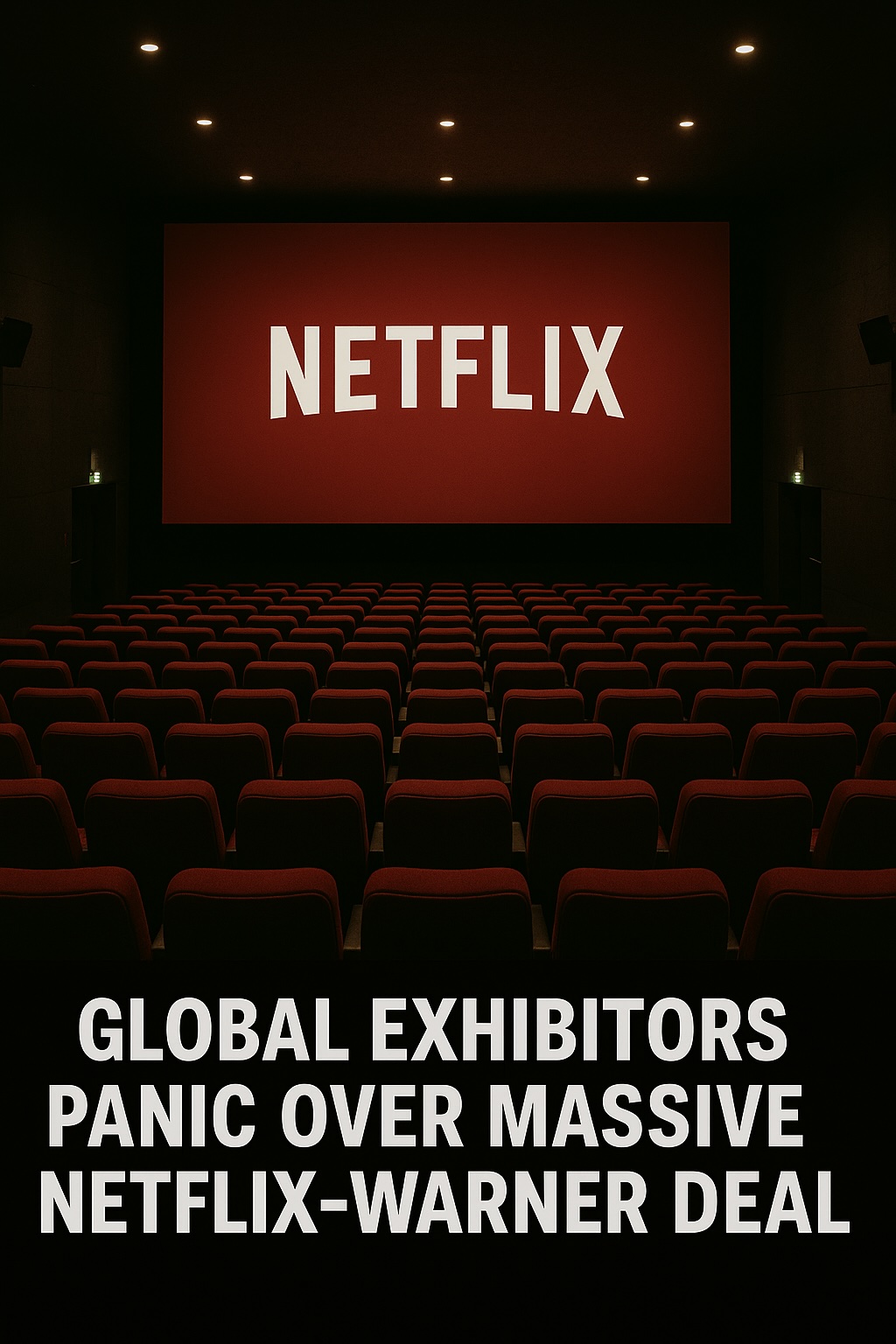
The entertainment landscape was shaken this week as Netflix and Warner Bros. Discovery announced an unprecedented global partnership. Around the world, traditional cinema exhibitors and production companies have been rattled by the sheer scale and strategic ambition of the deal. While stock markets reacted with volatility, the industry is still trying to grasp what this alliance means for the future of theatrical releases, streaming supremacy, and global distribution models.
Global Exhibitors Alarmed by Netflix Warner Pact
The announcement of the Netflix–Warner deal sent shockwaves through the exhibition world, from major cinema chains in North America to independent theater operators in Asia and Europe. Many fear that this partnership could accelerate the erosion of theatrical exclusivity windows, shifting even more content straight to streaming. Industry analysts describe this as “the most seismic realignment of film distribution since the dawn of digital streaming.”
Cinemas have long battled declining attendance and shifting consumer habits, but the Netflix–Warner merger signals more than just a change in viewing preferences—it spells a structural transformation. Combining Warner’s legendary catalog and studio muscle with Netflix’s data-driven digital infrastructure creates an entertainment powerhouse capable of controlling production, promotion, and distribution under one roof. Several exhibitors have privately expressed fears that this could push cinemas to the brink unless regulators impose restrictions or require fair-play access to major releases.
In a statement shared at an emergency conference of global exhibitors, several association heads voiced deep concern. One noted, “If major studios merge their distribution arms with streamers, theaters might become luxury nostalgia venues rather than cultural cornerstones.” The general mood among exhibitors is one of unease, bordering on panic, as they brace for possible shifts in release schedules and content licensing. What began as a digital content alliance may quickly reshape the entire film economy.
Industry Voices Divide Over Streaming’s Next Move
Within the broader industry, opinions remain sharply divided. Some executives see this deal as the logical next step in an era defined by consolidation, while others view it as a dangerous precedent. Netflix co-founder Reed Hastings reportedly described the alliance as “a creative partnership aimed at scaling stories across every screen, everywhere.” Meanwhile, Warner Bros. Discovery’s leadership called it “a bold reinvention of entertainment ecosystems.” Both statements emphasize synergy and growth—key words that failed to calm cinema owners fearing further marginalization.
Critics argue that global content monopolies ultimately stifle diversity. Smaller production houses and regional platforms may find themselves edged out of key markets. A veteran film producer, preferring anonymity, lamented, “This is no longer about storytelling—it’s about data control. Whoever owns the pipeline owns the story.” Advocates of the deal counter that such alliances are necessary to survive against rising competition from tech giants pouring billions into entertainment.
For now, the move has triggered both excitement and anxiety in equal measure. Tech investors praise the foresight; theater operators describe it as an existential threat. Analysts expect regulators in the U.S. and Europe to scrutinize the pact’s market implications, though few anticipate any immediate intervention. What’s clear is that the Netflix–Warner pact has redrawn the map of global entertainment yet again, with ripple effects that could transform how audiences consume film and television for decades to come.
As dust settles around this megadeal, the future of theatrical entertainment hangs in fragile balance. For every optimistic Silicon Valley backer heralding a “new era of unified storytelling,” there are hundreds of exhibitors wondering if their screens will ever glow as brightly again. Whether this partnership becomes a golden age for global content—or a final blow to traditional cinema—depends on how the industry navigates the delicate line between innovation and preservation.