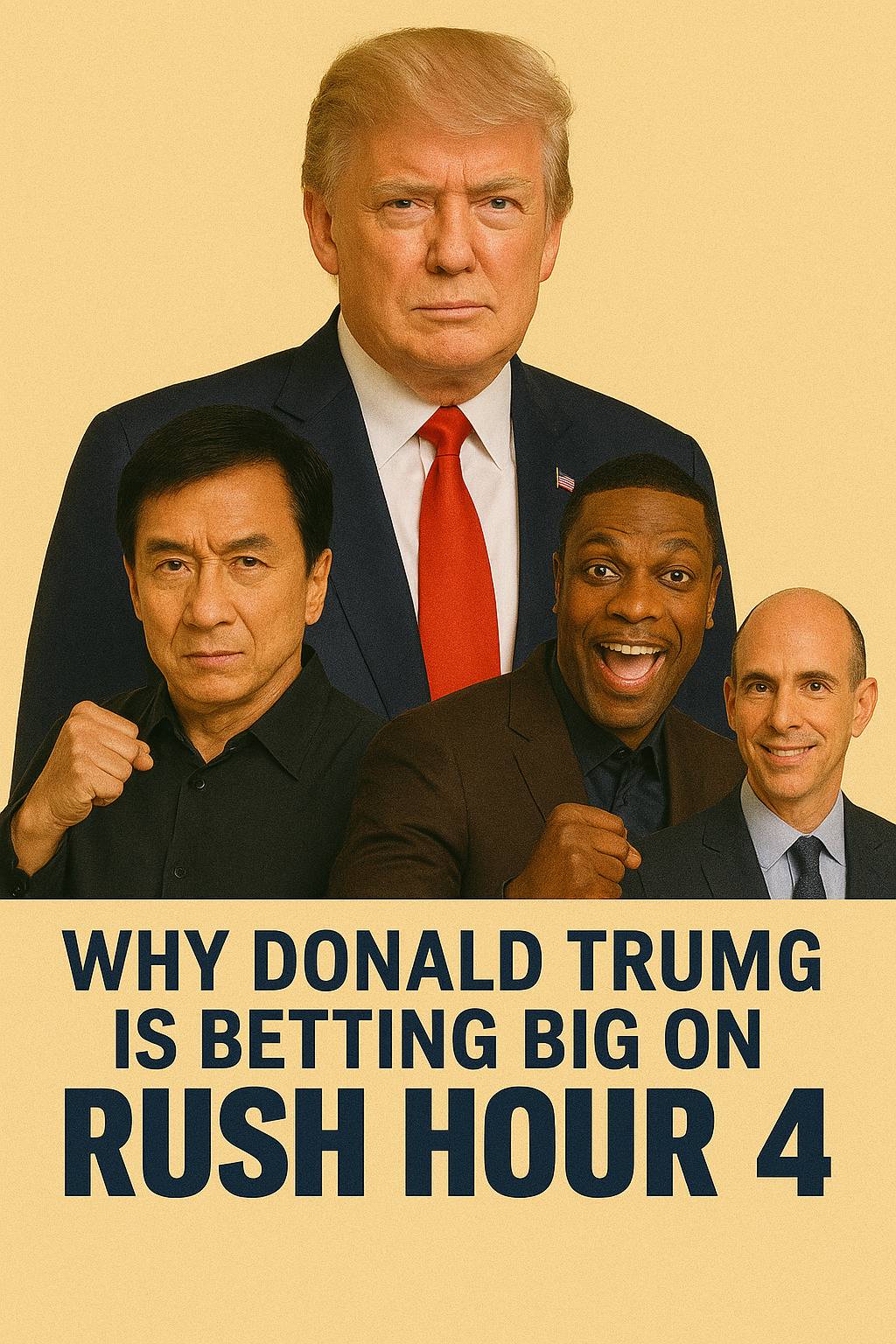
Donald Trump’s decision to align himself with Rush Hour 4 has raised eyebrows across the entertainment and political worlds. Known for his ability to turn media attention into a strategic advantage, Trump’s reported backing of the long-awaited sequel seems far more than a random Hollywood venture. Behind the glitz of the movie business lies a carefully calculated effort to reignite global interest in his brand, his image, and his influence.
A Strategic PR Move Aimed at Reviving Global Appeal
Donald Trump has never been shy about making headline-grabbing moves, and his involvement with Rush Hour 4 appears to follow that same pattern. The Rush Hour franchise, beloved across continents, offers him a chance to tap into a global fanbase that transcends cultural and political boundaries. By associating with a film that celebrates cross-cultural cooperation and humor, Trump is positioning himself not merely as a political figure but as an international personality seeking renewed relevance beyond politics.
The idea reportedly stems from Trump’s team recognizing that Rush Hour holds nostalgic weight and universal appeal — key ingredients for a soft power comeback. While traditional political campaigns focus on speeches and rallies, Trump’s instincts point toward entertainment as the ultimate amplifier. Rush Hour 4, featuring the much-loved duo of Jackie Chan and Chris Tucker, provides a convenient platform for Trump to align his image with themes of humor, partnership, and unity — ironic or not, that connection draws attention on a global scale.
From a branding perspective, this collaboration could rejuvenate Trump’s media narrative, which has fluctuated between political polarities and controversy. By stepping into a cultural phenomenon, he’s effectively betting on the idea that people want an escape from division — and that his name attached to a mainstream blockbuster will invite curiosity rather than criticism. It’s a bold, calculated PR gamble designed to restore a sense of showmanship synonymous with his early years on television.
Trump’s Rush Hour 4 move may seem unconventional, but it perfectly fits his playbook of blending show business with savvy self-promotion. It reflects his understanding that in a world driven by pop culture and viral moments, influence often comes from where people least expect it — the big screen, not the podium. Whether or not the film succeeds critically or commercially, Trump has already secured what he values most: global attention. In that respect, his gamble on Rush Hour 4 might be less about cinema and more about crafting the next act of the Trump brand saga.